Traditional Japanese tea ceremonies have been a cornerstone of Japanese culture for centuries, emphasizing the importance of mindfulness, respect, and harmony with nature.
The ceremony, also known as Chanoyu, Sado or Ocha, is a highly ritualized and formalized event that embodies the principles of Zen Buddhism and the aesthetics of Wabi-Sabi.
In this article, we will explore the cultural significance of traditional Japanese tea ceremonies worldwide, delving into their history, philosophy, and impact on modern society.
The traditional Japanese tea ceremony is a unique and important aspect of Japanese culture, symbolizing harmony, respect, and the beauty of nature.
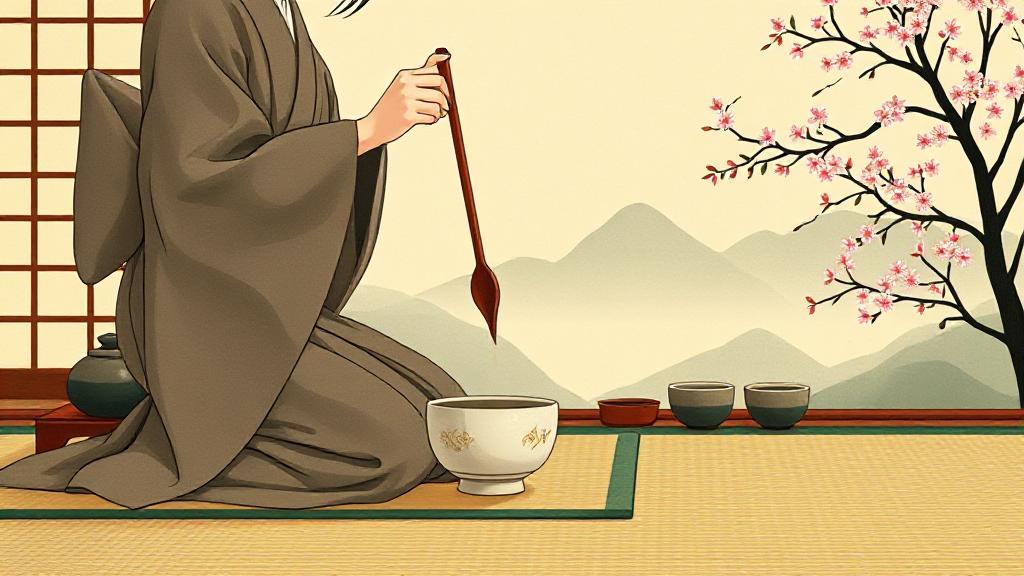
The ceremony is typically performed in a specially designed room, called a chashitsu, which is designed to promote a sense of calm and tranquility.
The ceremony involves the preparation and serving of green tea, known as matcha, in a precise and choreographed manner, with every movement and gesture carrying significant symbolic meaning.
Zen Buddhism played a significant role in shaping the traditional Japanese tea ceremony, which was influenced by the Zen concept of "mu" or the void.
The ceremony emphasizes the importance of simplicity, purity, and elegance, which are all core principles of Zen Buddhism.
The ceremony also incorporates elements of Zen meditation, such as the use of a whisk to mix the tea, which is meant to stimulate the mind and promote a sense of clarity.
While Chinese tea ceremonies have a rich history and cultural significance, they are distinct from the traditional Japanese tea ceremony.
Chinese tea ceremonies often incorporate elements of Chinese philosophy, such as the concept of yin and yang, which is not a significant aspect of Japanese tea ceremonies.
However, both Chinese and Japanese tea ceremonies share a common goal of promoting harmony and balance in the individual and in the world.
As interest in Japanese culture grows, the traditional Japanese tea ceremony is gaining global appreciation.
The ceremony offers a unique cultural experience for those interested in exploring Japan's rich cultural heritage.
The traditional Japanese tea ceremony is not only a cultural phenomenon but also a spiritual and philosophical practice that embodies the principles of harmony, respect, and tranquility.
Tea has played a significant role in social, ceremonial, and economic aspects of various cultures worldwide.
In Japan, tea is an integral part of the local culture, with influences from both eastern and western tea cultures.
In other countries, such as China, India, and Morocco, tea is also an important part of the cultural heritage, with unique traditions and customs surrounding its preparation and consumption.
The traditional Japanese tea ceremony is a ritual that emphasizes the importance of mindfulness and respect.
The ceremony involves a series of precise movements and gestures, each carrying significant symbolic meaning.
The ceremony is not just about drinking tea, but about cultivating a sense of harmony and balance in the individual and in the world.
The tea master plays a crucial role in preserving cultural heritage and teaching future generations.
The tea master orchestrates the entire experience, guiding guests through a journey of elegance, reflection, and quiet connection.
The tea master is responsible for preparing the tea, selecting the utensils, and creating a sense of harmony and balance in the ceremony.
The traditional Japanese tea ceremony has evolved over time, adapting to changing societal values and cultural norms.
The ceremony has been influenced by modern technology, with the use of social media and online platforms to promote and share the ceremony.
The ceremony has also been adapted to accommodate modern tastes and preferences, with the use of new ingredients and innovative techniques.
The traditional Japanese tea ceremony is a powerful tool for promoting cultural exchange and understanding.
The ceremony provides a unique opportunity for people from different cultural backgrounds to come together and share in a common experience.
The ceremony promotes mutual respect, understanding, and appreciation, fostering a sense of global community and harmony.
In conclusion, traditional Japanese tea ceremonies have a rich cultural significance that is not limited to Japan but has a global impact on how tea is consumed and appreciated worldwide.
The ceremony is a unique and important aspect of Japanese culture, symbolizing harmony, respect, and the beauty of nature.
As interest in Japanese culture grows, the traditional Japanese tea ceremony is gaining global appreciation, offering a unique cultural experience for those interested in exploring Japan's rich cultural heritage.
The ceremony is not only a cultural phenomenon but also a spiritual and philosophical practice that embodies the principles of harmony, respect, and tranquility, promoting cultural exchange and understanding, and fostering a sense of global community and harmony.
Whether you are interested in Japanese culture, tea, or mindfulness, the traditional Japanese tea ceremony is an experience that is not to be missed.
So, take a step into the world of traditional Japanese tea ceremonies, and discover the beauty, harmony, and tranquility that they have to offer.
With its rich cultural significance, unique traditions, and global impact, the traditional Japanese tea ceremony is an experience that will leave you feeling inspired, refreshed, and connected to the world around you 🌎🍵💚.
