Navigating challenging PSLE math questions can be likened to embarking on a puzzle-filled adventure, where each problem is a mysterious door that requires the right key to unlock.
As students in Singapore prepare for the Primary School Leaving Examination, they often find themselves standing in front of these doors, unsure of which mathematical tool to use to gain entry.
With the clock ticking, the pressure mounts, and the journey can become overwhelming.
However, what if students had a treasure map to guide them through this math labyrinth, highlighting the most effective paths and strategies to solve even the most daunting problems?
By mastering a few essential techniques and adopting a systematic approach, students can transform their math journey into a confident and successful exploration.
Mastering PSLE math concepts is crucial for students in Singapore to excel in their exams, and with the right online resources, they can build a strong foundation in mathematics.
By understanding the key concepts and practicing regularly, students can develop problem-solving skills and boost their confidence.
With online tutorials and practice questions, students can learn at their own pace and identify areas where they need improvement.
As the PSLE math exam approaches, students who are well-versed in math concepts will be the ones to unlock the doors to a brighter future.

6 Math Syllabus and Common Challenges Faced
The Primary 6 math syllabus is designed to provide students with a comprehensive understanding of mathematical concepts, including algebra, geometry, and data analysis.
The syllabus is structured to help students develop problem-solving skills, critical thinking, and analytical reasoning.
With patience and practice, students can master these concepts and build a strong foundation for future math studies.
Developing critical thinking skills is essential for solving complex math problems quickly and accurately.
Students can start by practicing math puzzles and brain teasers that require logical reasoning and problem-solving.
This helps to improve their ability to think critically and approach complex math problems from different angles, leading to a deeper understanding of math concepts.
Breaking down complex problems into manageable parts is like trying to eat a gigantic pizza by itself, it's overwhelming and nearly impossible, but when you slice it into smaller, bite-sized pieces, it becomes a delicious and enjoyable meal.
This approach allows individuals to tackle each component separately, analyzing and understanding its intricacies, and then slowly start to build upon each part, creating a sturdy foundation for the entire problem.
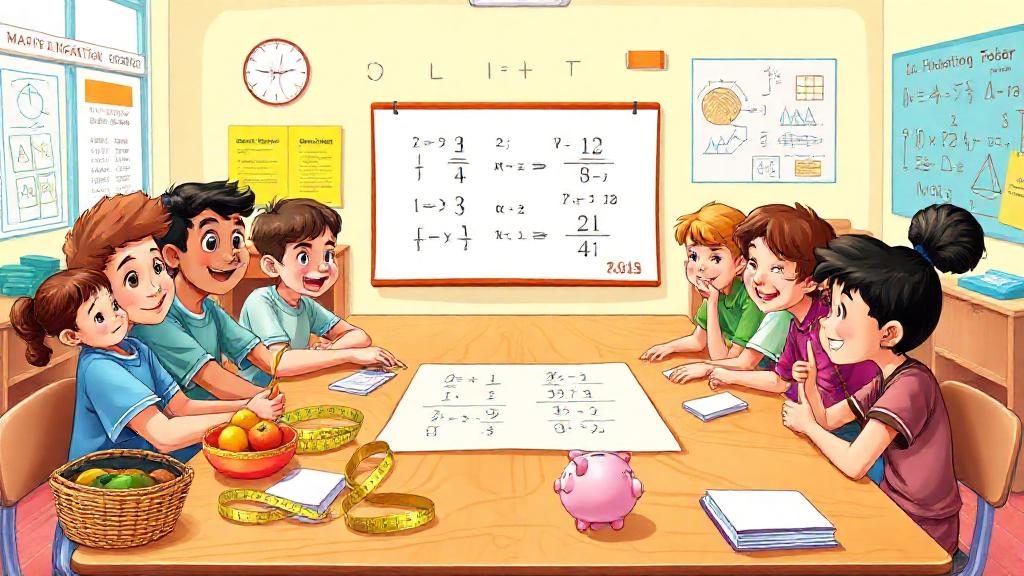
To tackle PSLE math questions effectively, it is essential to understand how to apply mathematical concepts to real-life situations, as this skill is frequently assessed in the examination.
The ability to relate mathematical concepts to everyday problems enables students to think critically and make informed decisions.
To tackle complex problems, students must develop essential spatial skills.
To solve math word problems, students need to identify patterns and relationships.
A crucial step — breaking down complex problems into manageable parts: analyzing the question, identifying key information, and selecting the appropriate operation.
Understanding the context of the problem is vital.
Incorporating sample questions and video solutions into a broader study plan can be beneficial for students who learn visually or kinesthetically.
For instance, students who struggle with abstract concepts can use video solutions to visualize the problem-solving process and gain a deeper understanding of the underlying principles.
As students in Singapore progress through their primary education, mastering PSLE math skills becomes increasingly crucial for their academic success, and regular practice exercises play a significant role in building their confidence and competence in tackling complex mathematical problems.
Through consistent practice, students can develop a deeper understanding of various mathematical concepts, such as algebra, geometry, and arithmetic, and improve their ability to apply these concepts to solve real-world problems.
As we navigate the complexities of PSLE math, it becomes clear that mastering these challenges is not just about solving equations, but about cultivating a mindset that embraces creativity and persistence.
The journey to excellence in math is a lifelong pursuit, and for students in Singapore, overcoming the hurdles of the PSLE is just the beginning.
By incorporating effective strategies and maintaining a growth mindset, students can unlock their full potential and develop a deeper appreciation for the beauty of mathematics.
Ultimately, the ability to solve challenging math questions with ease is not just a testament to one's academic prowess, but a reflection of the dedication and hard work that has been invested in mastering the subject.
